If you live in the Lowcountry, a mailer from Clemson University may have landed in your mailbox recently. It asks homeowners to watch for the yellow-legged hornet, an invasive species that preys on honeybees and puts pressure on native pollinators. A landscape designer cannot do anything about the hornet itself, but good pollinator garden design in Charleston can give the pollinators that remain a better place to feed.
The hornet was first found in South Carolina near Bluffton in November 2023, and as of mid-July, state and USDA crews were running roughly 4,300 traps across 13 counties, including Charleston and Berkeley. If you find a large paper nest, do not disturb it. Report it through the yellow-legged hornet reporting tool and a response team will arrange removal. The rest of this post covers how I design a pollinator garden that blooms from spring to frost and still looks composed rather than overgrown.
Why Pollinator Garden Design Matters in the Lowcountry
A pollinator garden gives bees, butterflies, and other beneficial insects a dependable source of nectar, pollen, water, and shelter close to your home. Honeybees get most of the attention, but much of the pollination in a Lowcountry garden is done by insects people rarely notice: native bees, beetles, flies, wasps, and butterflies.
The Lowcountry gives a pollinator garden an unusually long season to fill. Butterflies here are active from early spring until the first frost in late fall, and that long stretch is exactly where most residential gardens fall short.
Most gardens I walk in Mount Pleasant and on Daniel Island bloom beautifully in April and then go quiet by July. For a pollinator, that is a restaurant that closes for half the year. The design work is less about finding the right plant and more about building a sequence, so that something in the garden is always in flower from March through November.
What Should You Plant in a Charleston Pollinator Garden?
The best pollinator garden in Charleston is planted for three seasons of bloom rather than a single spring show. Eight to ten native species is a good starting point: enough variety to draw a wide range of pollinators, and few enough that each one can be planted in a meaningful mass.
The table below is the kind of sequence I start from. Every plant on it is a South Carolina native, and the final selection always depends on the site’s sun, soil, drainage, and salt exposure. For the native shrubs and grasses I rely on most in Lowcountry landscapes, such as beautyberry, yaupon holly, and muhly grass, see my guide to designing with native plants in the Lowcountry.
| Bloom season | Native plant | Where it works in the design |
|---|---|---|
| Early spring | Eastern redbud (Cercis canadensis) | A small tree for a bed corner or the edge of a patio |
| Spring | Wild indigo (Baptisia australis) | Shrub-like perennial with blue flower spikes for the middle of the bed |
| Spring | Golden alexanders (Zizia aurea) | Low yellow flowers for the front edge |
| Spring into summer | Coral honeysuckle (Lonicera sempervirens) | A native vine for a fence, arbor, or porch post; also draws hummingbirds |
| Early summer | Stokes’ aster (Stokesia laevis) | Lavender flowers at the front of a border |
| Summer | Butterfly weed (Asclepias tuberosa) | Orange blooms for dry, sunny edges; a host plant for monarch caterpillars |
| Summer | Dense blazing star (Liatris spicata) | Vertical spikes that add structure to a mass planting |
| Summer into fall | Spotted beebalm (Monarda punctata) | A long bloom that bridges summer and fall |
| Summer into fall | Swamp sunflower (Helianthus angustifolius) | A tall back-of-border plant for moister corners |
| Late summer into fall | Goldenrod (Solidago rugosa ‘Fireworks’) | Late-season gold as the rest of the garden fades |
| Late summer into fall | Blue wood aster (Symphyotrichum cordifolium) | Blue flowers that carry the garden toward frost |
The list matters less than the overlap. Each season’s bloomers should start before the previous group finishes, so the garden never has a gap.
How Should a Pollinator Garden Be Laid Out?
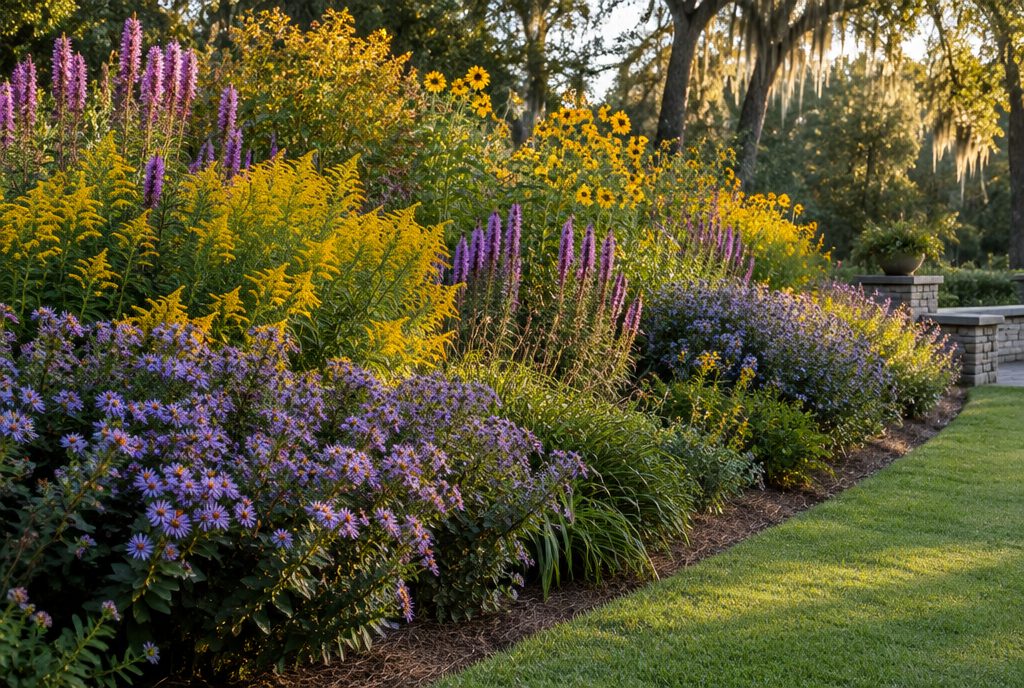
A pollinator garden should be laid out in the sunniest part of the property, with each species planted in a mass at least three feet wide and the bloom seasons spread across the whole bed. Massing makes flowers easier for pollinators to find and work, and it gives the garden a far more intentional look.
These are the layout principles I apply on every pollinator project.
Start with the sunniest spot on the property. Most of the nectar plants in the table above perform best in full sun. In many Charleston yards, that means the open side of the backyard or a bed along the edge of a patio rather than the shaded ground under a live oak.
Plant in drifts, not dots. A single coneflower here and a single aster there reads as a collection, not a garden, and it is harder for pollinators to work. Masses of five, seven, or nine plants of one species read as deliberate from across the yard.
Spread the seasons across the bed. If all the spring bloomers sit at one end, that end looks bare by August. I interleave spring, summer, and fall groups so every part of the bed has something happening in each season.
Put it where you will actually see it. A pollinator garden tucked behind the garage still does its job for the insects, but you miss the best part. I like to place it off the patio or within view of the kitchen window, where you can watch the butterflies from the chair you already sit in.
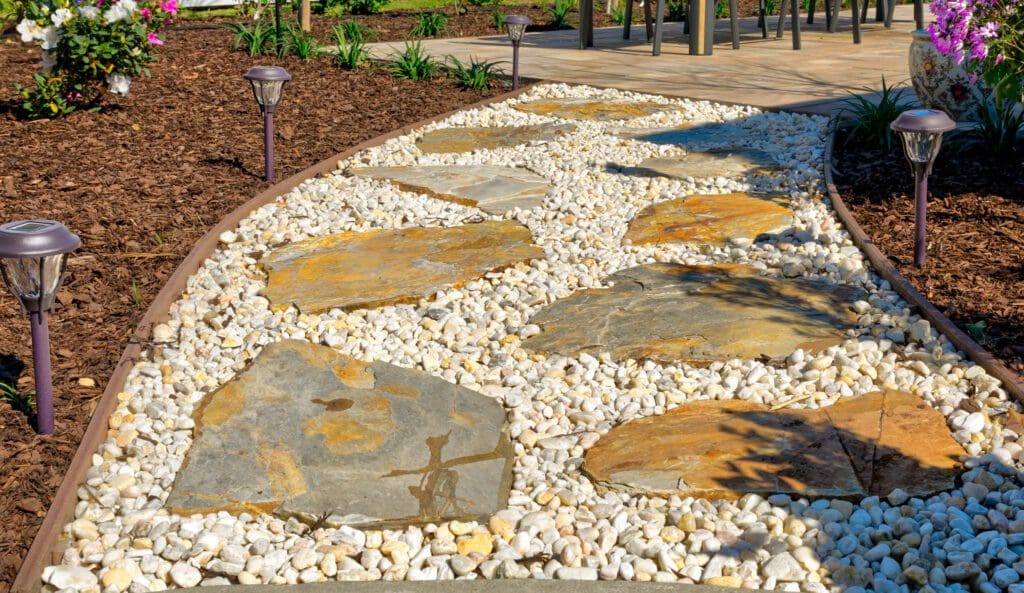
Give it a frame. A clean bed edge, a stone path, or a low seating wall tells the eye the planting is intentional. This matters especially on Daniel Island and in other HOA communities like Palmetto Bluff, where a designed edge is often the difference between a garden that passes architectural review and one that raises questions.
What Else Do Pollinators Need Besides Flowers?
Pollinators need host plants for their young, water, and places to nest and shelter, not just nectar. A garden that provides all four supports pollinators through their full life cycle rather than serving as a brief stop.
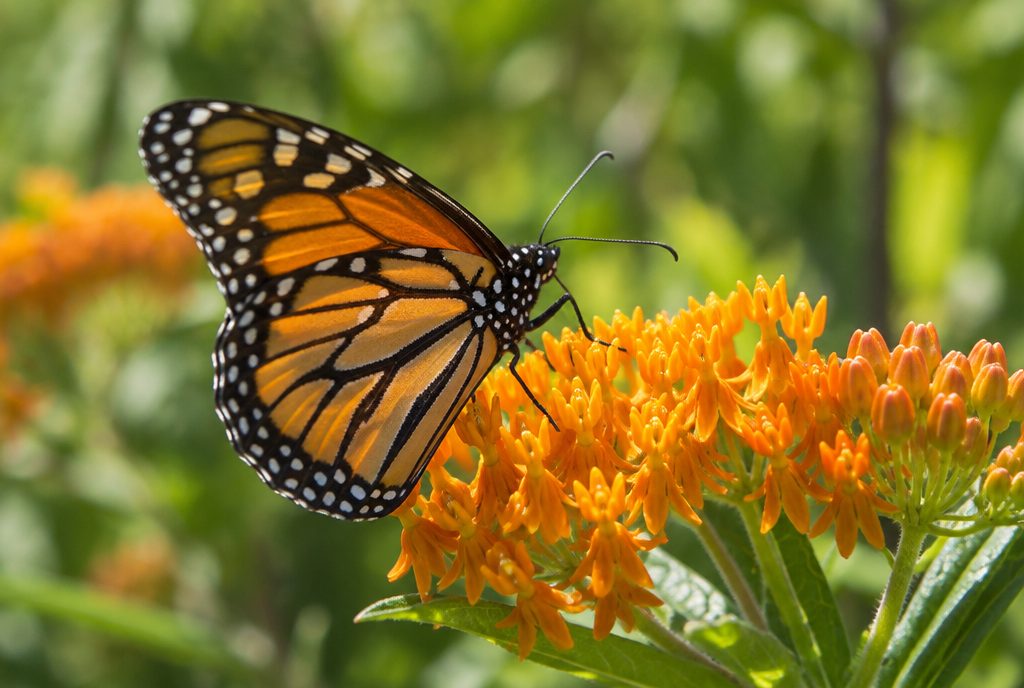
Host plants. Adult butterflies feed on nectar, but their caterpillars can only eat the foliage of specific plants. Milkweed is the only food monarch caterpillars eat, and the native species easiest to find in South Carolina are butterfly weed, common milkweed, and swamp milkweed. Skip tropical milkweed, which is widely sold but not native. Clemson Extension points to a 2015 report finding that monarchs overwintering in the Southeast on tropical milkweed were five to nine times more likely to be infected with a parasite.
Water. A shallow stone basin or a dish with damp sand gives butterflies a place to drink, rest, and take in minerals. In the design, I treat it as a sculptural element: a carved stone bowl set at the edge of the planting rather than a plastic saucer.
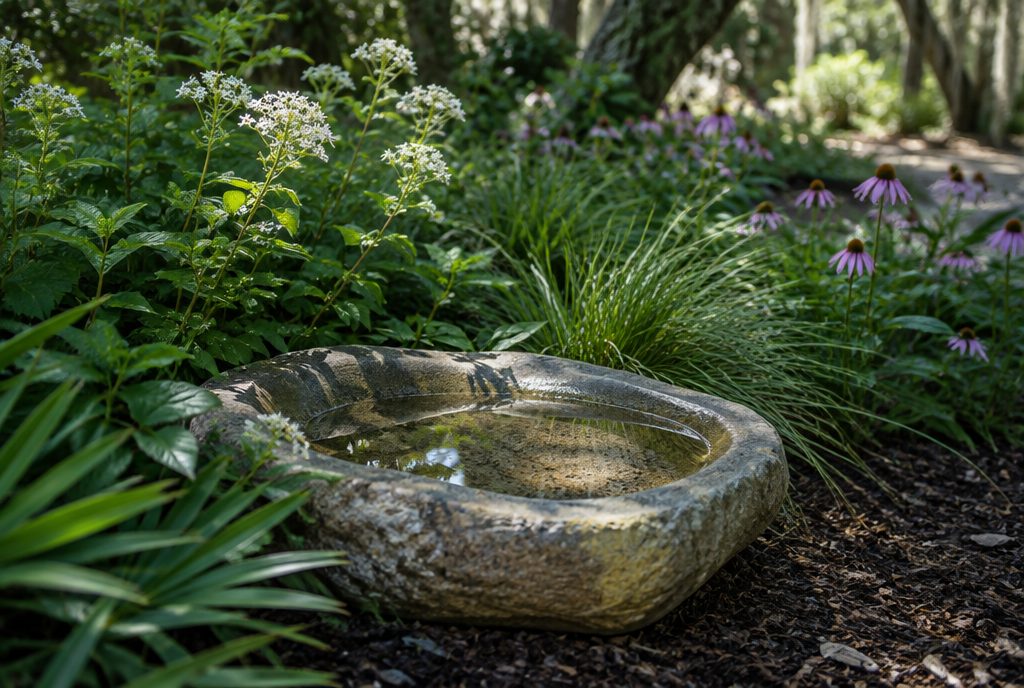
Shelter and nesting. Many native bees nest in the ground, so I leave a few un-mulched, well-drained patches in full sun at the back of the bed. Wood-nesting bees will use a simple nest box mounted three to six feet high in a sheltered spot that gets morning sun. Both are easy to work into a design and invisible from the patio.
Fewer chemicals. Pesticides do not belong in a garden built for insects. Plants adapted to Lowcountry conditions tend to need far less intervention once established, which is one more reason to design with natives.
When Is the Best Time to Plant a Pollinator Garden in Charleston?
Fall is the best time to plant a pollinator garden in Charleston. Our soil does not freeze in winter, so roots keep growing through the cool months while the tops rest. Plants go into spring with an established root system instead of starting from scratch in the heat.
Installed in October or November, a pollinator garden gets a full winter of root growth before its first bloom season. That timing also means the planning happens now, while there is still time to have the garden in the ground before winter. I cover the broader seasonal picture in when to start a landscape design project in Charleston.
How a Pollinator Garden Project Works With MP Landscape Design
A pollinator garden can stand on its own or become one part of a larger plan that includes a patio, lighting, and the rest of the planting. Either way, it starts the same way as every project we take on.
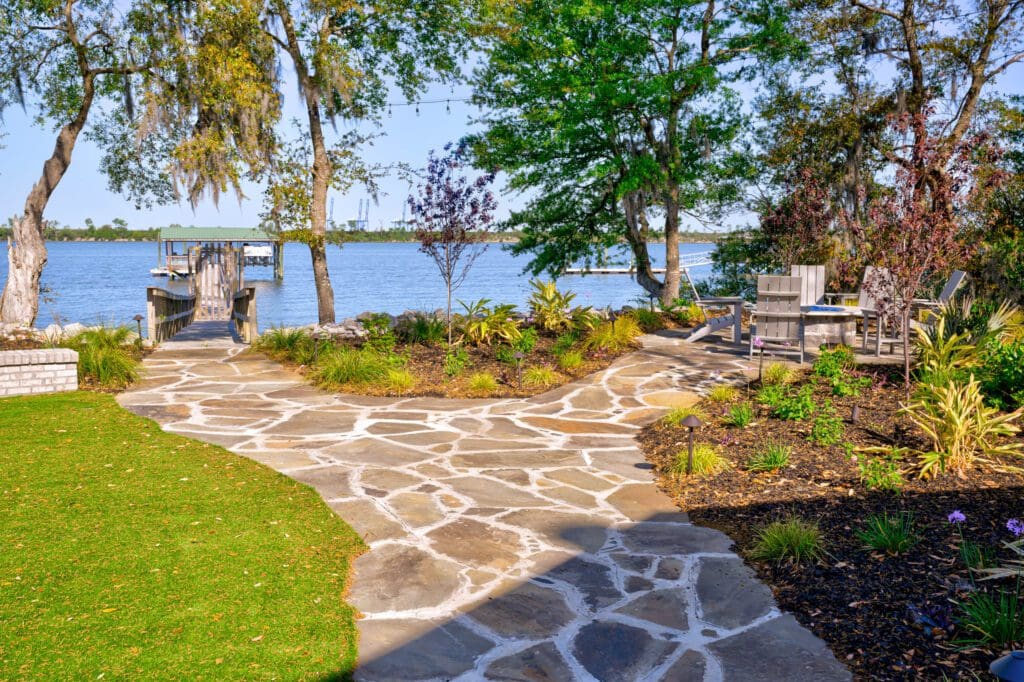
The process begins with a design questionnaire and an on-site consultation. A $350 design retainer covers the visit and applies toward your design fee. I walk the property with you, note where the sun falls and how water moves, and talk through how you use the yard. The completed design is delivered within five business days of the consultation, with a planting plan, a bloom sequence, and a line-item budget, so every cost is clear before anything goes in the ground.
Our team installs what we design, so the plan you approve is the garden you get. You can read more about our approach on the Charleston landscape design page. We serve homeowners across Charleston, Mount Pleasant, Daniel Island, Isle of Palms, Sullivan’s Island, and Palmetto Bluff in Bluffton, SC.
FAQs About Pollinator Garden Design in Charleston
What are the best plants for a pollinator garden in Charleston, SC? Native plants that bloom in sequence from spring through fall work best. Reliable choices include eastern redbud and wild indigo for spring, butterfly weed and blazing star for summer, and goldenrod, swamp sunflower, and blue wood aster for fall. Eight to ten species is a good starting point. The right mix for your yard depends on sun, soil, drainage, and salt exposure.
How big does a pollinator garden need to be? There is no minimum size. Even a single bed along a patio can support pollinators if it holds a variety of species planted in groups at least three feet wide, which makes flowers easier for pollinators to find. A larger space simply allows more species and a longer, more continuous bloom season.
Should I plant milkweed in my Charleston garden? Yes, as long as it is a native species. Milkweed is the only food monarch caterpillars eat. Butterfly weed, common milkweed, and swamp milkweed are the most readily available native options in South Carolina. Avoid non-native tropical milkweed, which has been linked to higher rates of a monarch parasite in the Southeast.
When should I plant a pollinator garden in South Carolina? Fall is the best time. Because Lowcountry soil does not freeze, roots continue growing through the mild winter while the tops rest. A garden planted in October or November enters spring with established roots and is better prepared for its first summer.
Can a pollinator garden work in an HOA community? Yes. Most HOAs are concerned with how a landscape looks rather than which species it uses. A pollinator garden with defined bed edges, massed plantings, and clear structure reads as designed rather than overgrown. We review HOA guidelines as part of every design and handle the documentation for architectural review.
Ready to Plan a Pollinator Garden This Fall?
If you would like a garden that supports Lowcountry pollinators and still looks like it belongs to a well-designed home, I would welcome the conversation. Fill out the design questionnaire and we will respond within 24 hours to set up a call.
Schedule Your Landscape Planning Call
To see completed planting and outdoor living work, browse the project portfolio.