Native plants have earned a well-deserved reputation in the Lowcountry. They are better adapted to the heat, humidity, and sandy coastal soils here than most imported ornamentals, they support local wildlife, and they tend to settle in and thrive with far less intervention once established. But “plant natives” is not a design strategy. It is a starting point. Here is what I have learned about working with native plants in Lowcountry landscapes in a way that holds up beautifully season after season.
Why Native Plants Make Sense in a Lowcountry Landscape
The Charleston area sits in USDA Plant Hardiness Zone 9a, a coastal climate with long, humid summers, mild winters, sandy and often poorly draining soils, and in many neighborhoods, meaningful salt exposure from the Atlantic or from tidal waterways. It is a climate that is hard on plants that were not selected for it.
Imported ornamentals that look beautiful in a nursery often struggle within a season or two here. They may survive with regular irrigation and chemical inputs, but they do not thrive independently the way a plant selected for this specific environment will. Over the course of a project, that difference shows up in plant replacement costs, water consumption, and the overall health of the landscape.
Native plants, by contrast, evolved here. They are accustomed to the summer heat spikes, the wet periods followed by dry stretches, the salt air, and the soil conditions that challenge so many alternatives. The Clemson Home & Garden Information Center maintains research-based guides on native and adapted plants for South Carolina’s coastal zone, and those resources inform how I approach plant selection on every project in this region.
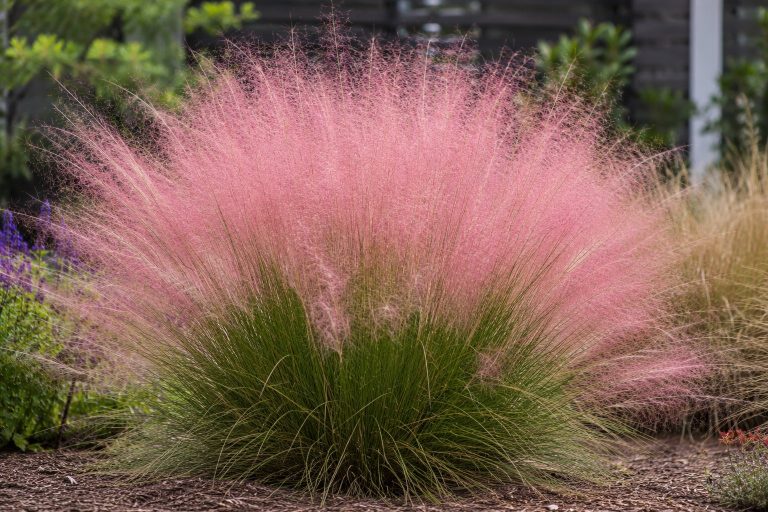
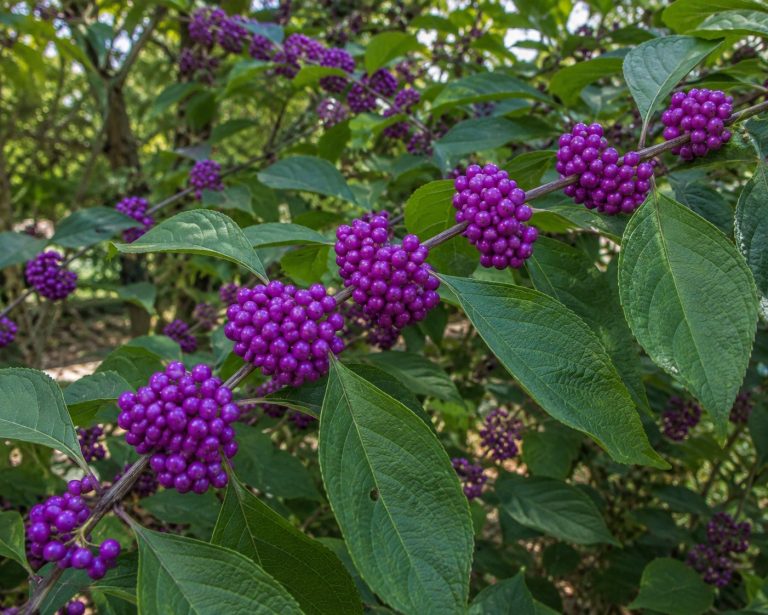
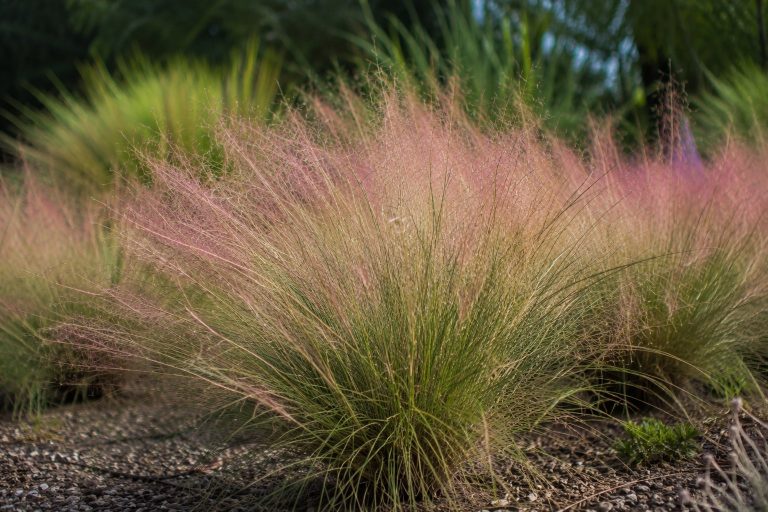
Beyond performance, there is the wildlife dimension. Native plants support the insects, birds, and pollinators that are native to this ecosystem in ways that imported species generally cannot. A landscape that includes sweetgrass, beautyberry, and native muhly grass is doing something for the local environment that a landscape of imported boxwood and knockout roses is not.
Which Native Plants Actually Perform Well in Lowcountry Landscape Design
This is where the conversation gets specific. Not every plant that technically qualifies as a South Carolina native performs equally well in a designed residential landscape. Some are too aggressive. Some require conditions most residential lots do not offer. Some look wonderful in a natural setting but do not integrate well into a refined design.
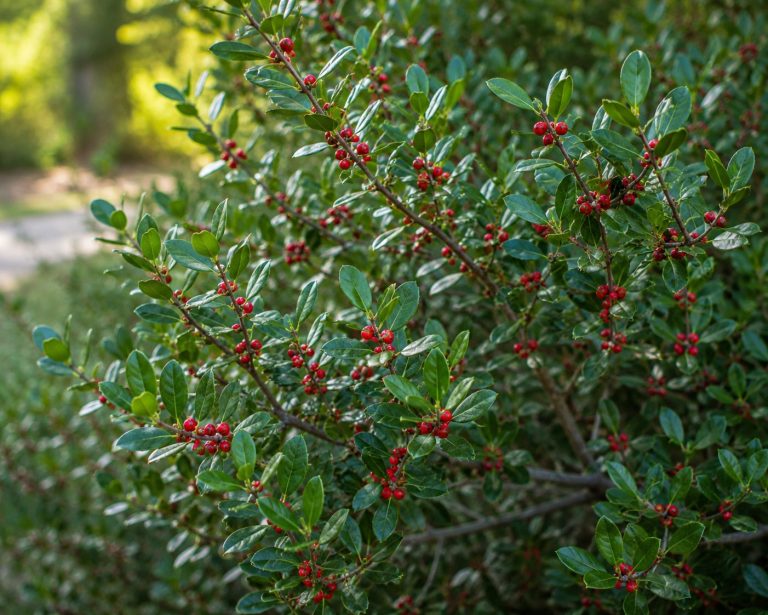
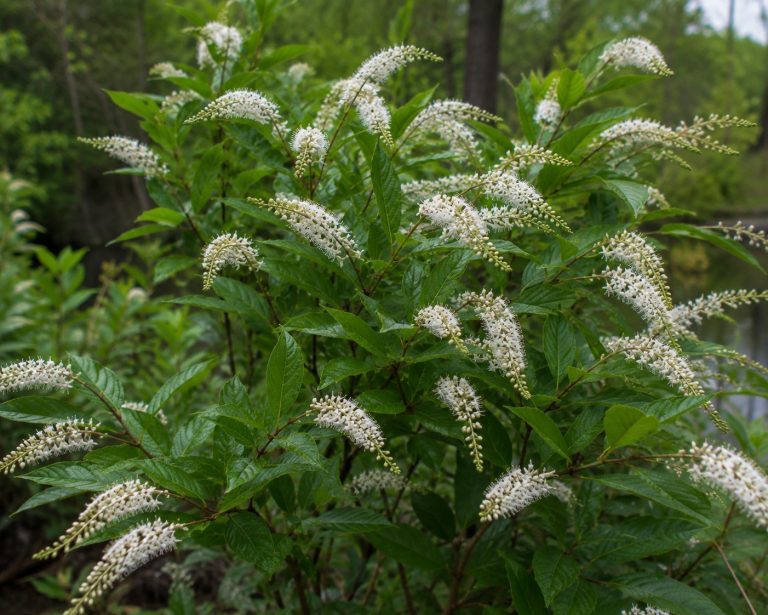
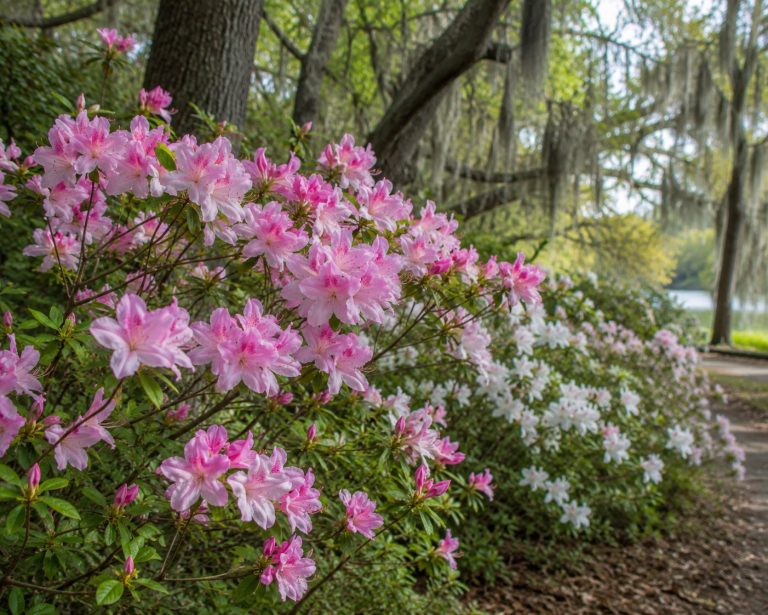
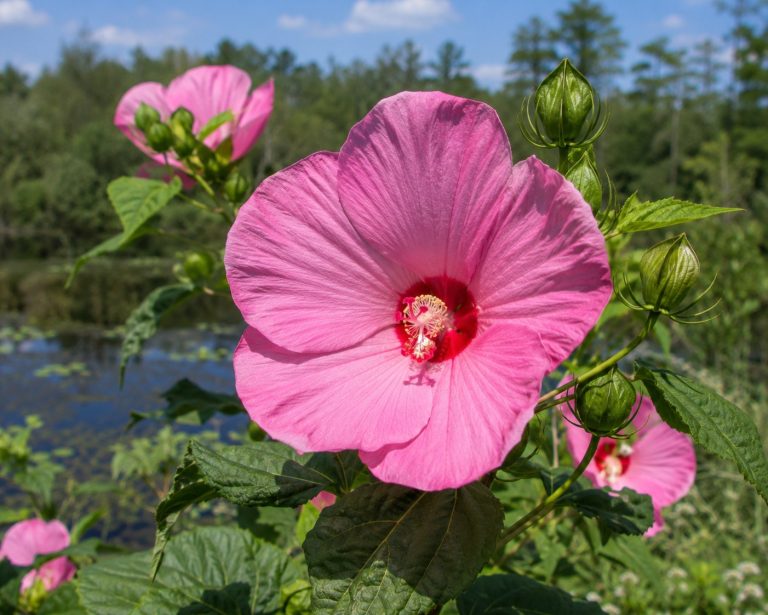
Here are the natives I reach for most often, and what they bring to a Lowcountry landscape.
How to Design With Native Plants Without the Wild Look
The most common hesitation I hear from homeowners about native plants is some version of: “I don’t want my yard to look unkempt.” It is a fair concern. A native plant garden done without design intention can look like a field rather than a landscape. The solution is not to avoid natives. It is to design with them deliberately.
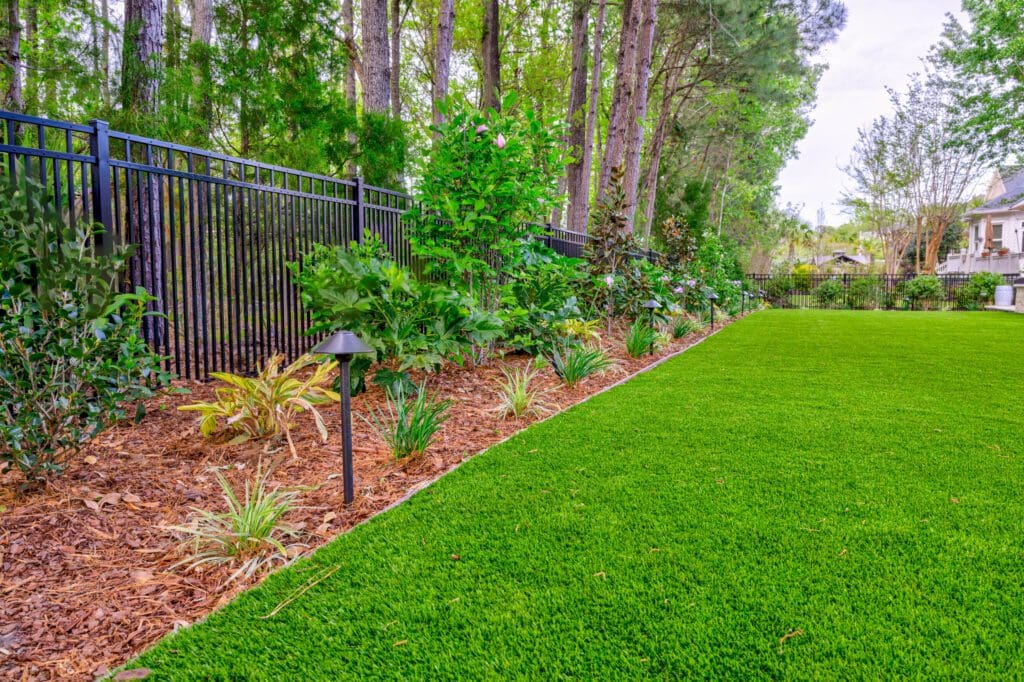
A few principles that I apply on every native-forward project:
Structure first. The landscape needs a clear framework before the planting goes in. Defined bed edges, hardscape elements like stone pathways or low seating walls, and a clear sense of where the lawn ends and the planting area begins give the eye something to follow. Within that structure, native plants can be loose and naturalistic without reading as unintended.
Layer the planting. A successful native planting has height variation: a canopy layer of existing or new trees, a mid-level shrub layer, and a ground layer of grasses and perennials. When each layer is represented, the planting looks intentional even when the individual plants are informal in character. A single layer of ground-level natives spread across a bed tends to look sparse until fully established, and reads as unfinished in the meantime.
Choose cultivated selections where appropriate. Many native species have cultivated varieties that are more compact, more reliably flowering, or better suited to a residential scale than the straight species. Using a compact cultivar of yaupon holly rather than the full-size species, or choosing a named selection of Virginia willow rather than whatever is available, gives the designer more control over the finished result. These are still native plants in every meaningful sense.
Mix in structure plants. I rarely design a planting that is exclusively native. A few well-placed evergreen shrubs or ornamental grasses provide year-round structure and give the native perennials and deciduous shrubs a framework to anchor against. The mix reads as designed rather than collected.
Native Plants and Lowcountry HOA Landscapes
One practical consideration worth raising: not every HOA in the Charleston region views naturalistic or native planting the same way. Communities on Daniel Island, in many Mount Pleasant neighborhoods, and in planned communities like Palmetto Bluff in Bluffton, SC each have their own standards for what is considered appropriate in the residential landscape.
In my experience, the solution is design quality rather than plant selection alone. A native planting that is clearly designed, with defined edges, good structure, and a finished appearance, is far less likely to draw HOA scrutiny than one that looks like a naturalized patch left to its own devices. When I work on projects in HOA communities, I design native plantings to meet the association’s visual standards while still achieving the ecological and performance benefits that made the client interested in natives in the first place.
We handle HOA documentation as part of our standard process on every project where it applies.
A Note on Establishment
Native plants are not zero-effort from day one. The first growing season after installation requires consistent moisture while root systems establish, and some species take two full seasons to hit their stride. The payoff comes in years two and three, when an established native planting requires dramatically less intervention than a comparable planting of non-natives.
The SC Department of Natural Resources provides resources on native plant communities in South Carolina coastal habitats, and those materials are useful context for understanding how these plants behave in the wild before transplanting that understanding to a residential setting.
I am transparent with every client about the establishment period. A native landscape is an investment in a planting that performs and looks better over time, not one that peaks at installation and gradually declines.
FAQs About Native Plants in Lowcountry Landscape Design
What are the best native plants for a Charleston, SC landscape? Muhly grass, beautyberry, yaupon holly, sweetgrass, Virginia willow, and native azaleas are among the most reliable native plants for residential landscapes in the Charleston area. Species selection depends on the specific site conditions, including sun exposure, drainage, proximity to salt water, and the overall design intent. Clemson’s Home & Garden Information Center maintains research-based guides on native plants suited to South Carolina’s coastal zone.
Do native plants require less water in the Lowcountry? Once established, most native plants adapted to the coastal Lowcountry’s conditions require significantly less supplemental irrigation than non-native alternatives. The establishment period, typically one to two growing seasons, does require consistent moisture. After that, most coastal natives are well-suited to the region’s rainfall patterns and require watering only during extended dry periods.
Can native plants work in a formal or refined landscape design? Yes, with the right design approach. The key is structure: defined bed edges, layered plantings with clear height variation, and a mix that includes evergreen structure plants alongside the natives. Many native species also have cultivated selections that are more compact and predictable than the straight species, which makes them easier to integrate into a more formal design without sacrificing the plant’s native characteristics.
Are native plants allowed in HOA communities in Mount Pleasant and Daniel Island? HOA standards vary by community. Most associations are concerned with the finished appearance of the landscape rather than the specific plant species used. A native planting that is clearly designed and well-maintained is generally accepted in most communities. We review applicable HOA guidelines as part of the design process and design native plantings that meet those standards.
How long does it take for a native plant garden to look established? Most native plantings reach a mature, fully established appearance within two to three growing seasons. The first season often looks sparse as root systems develop. By the second fall, most native grasses and perennials are performing at or near their full character. Shrubs like yaupon holly and Virginia willow typically show meaningful size and presence by the end of their second season.
Ready to Design a Landscape That Belongs Here?
If you are considering a landscape project that incorporates native plants, or if you are simply ready to replace a struggling, high-maintenance landscape with something better suited to where you actually live, I would welcome the conversation. We serve homeowners across Charleston, Mount Pleasant, Daniel Island, Isle of Palms, Sullivan’s Island, and Palmetto Bluff in Bluffton, SC.
Fill out the design questionnaire and we will be in touch within 24 hours.
Schedule Your Landscape Planning Call
To learn more about our design approach, visit the landscape design service page or browse completed projects in the portfolio.